
Pinot Noir
The Pinot Noir grape variety has earned its good reputation in and through Burgundy. The noble benchmark grape variety has made it all over the world as Pinot Noir, Pinot Nero and Pinot Noir: Canada, the USA, New Zealand and beyond.






Pinot Noir

Assmannshausen red slate
2021

Höllenberg Spätburgunder GG
2019

Block B
2022

Boulder Bluff Vineyard Pinot Noir
2021

Eileen Vineyard Pinot Noir
2022

Louise Vineyard Pinot Noir
2022

Jessie Vineyard Pinot Noir
2022

Mt. Jefferson Cuvée Pinot Noir
2022

Mt. Jefferson Cuvée Pinot Noir 0.375l
2022

Marjorie Vineyard Pinot Noir
2022
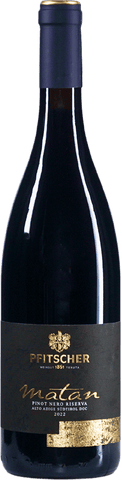
Pinot Nero Matan Riserva
2022
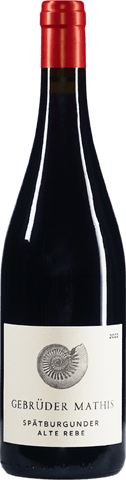
Spätburgunder Alte Rebe
2022


Pinot Noir - A Noble Grape Variety Full of Elegance
Pinot Noir, known in Germany as Spätburgunder, is one of the world's oldest and most renowned red wine grape varieties. Its wines are often called the "kings of red wines" due to their delicate aroma and velvety structure. Pinot Noir stands for elegance, finesse, and a multifaceted bouquet of red berry fruits. Despite the demanding cultivation requirements, winemakers around the globe succeed in producing some of the world's best red wines from this noble grape variety—from Burgundian Grand Cru to German Spätburgunder from top vineyards. In this introduction, you will learn everything important about the biology, cultivation, vinification, regional characteristics, and tips concerning Pinot Noir.
Biology of the Grape / Ampelography
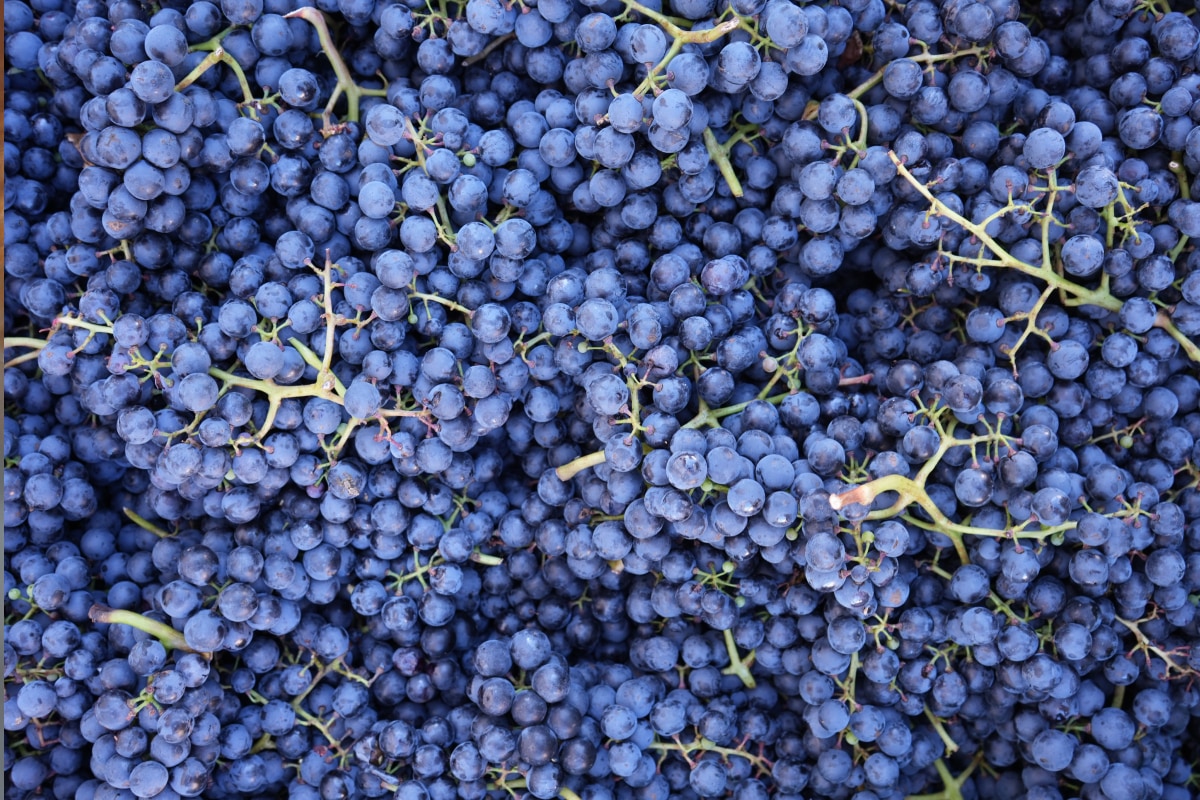
The Pinot Noir grape is small, dark blue to violet, and has a thin, delicate skin. The tightly packed grapes resemble a pine cone in shape, hence the name (French "Pinot" = pine cone, "Noir" = black). As a member of the Burgundy family, Pinot Noir has given rise to numerous mutations, including Grauburgunder (Pinot Gris or Pinot Grigio) and Weißburgunder (Pinot Blanc or Pinot Bianco). Spätburgunder buds early, making it susceptible to late frosts, and ripens relatively late compared to other varieties (the name "Spätburgunder" means "late Burgundy"). Nevertheless, it can fully ripen in cooler wine regions because, internationally speaking, it does not ripen extremely late.
The grape variety places high demands on location and climate: it prefers sheltered slopes with good sun exposure and does not tolerate large temperature fluctuations. Pinot Noir reacts strongly to soil and terroir – calcareous soils (as in Burgundy) often promote particularly fine aromas. Due to the thin berry skin, the variety is susceptible to diseases such as powdery and downy mildew, as well as botrytis (rot). Vineyard care requires a great deal of sensitivity to ensure the grapes ripen healthily and develop a balanced acidity profile. Through targeted clonal selection (e.g., Dijon clones), winemakers try to optimize yield and berry quality without losing the characteristic finesse of the grape.
Climate, Soil & Growing Conditions
Pinot Noir thrives best in rather cool to moderate climates. Regions that are too hot often lead to jammy flavors and higher alcohol, while in overly cool locations, the grapes do not fully ripen, resulting in thin, acidic wines. Ideal growing conditions are offered by areas with long, not-too-hot summers and cool nights—this preserves acidity and allows complex aromas to develop. In Germany, for example, Spätburgunder prefers sunny slopes in wine regions such as Baden, Pfalz, or Ahr, where the microclimate allows for sufficient ripeness. Suitable soil is crucial: limestone and clay soils, as in Burgundy, are considered optimal as they retain water well and impart minerality to the wine. But volcanic soils (e.g., Kaiserstuhl in Baden) or slate (as in Ahr) can also produce excellent Pinot Noirs—each vineyard site individually shapes the character of the grape.
Since Pinot Noir buds early, winemakers avoid valley floor locations susceptible to late frosts; instead, it is planted on mid-slopes where cold air can drain away. Yields are deliberately kept low, as the grape variety loses concentration and quality with excessive yields. In the vineyard, Spätburgunder requires careful canopy management and selective harvesting to pick only ripe, healthy grapes. The optimal harvest time is usually in the middle to the second half of the grape harvest season—the goal here is to find the perfect balance between ripeness and acidity. A Spätburgunder of Auslese or Spätlese quality (as a Prädikatswein) is rather rare, as the grapes are usually harvested for dry red wines; in this case, the term "Spätlese" refers to the must weight, not a sweet style. Overall, Pinot Noir only shows its full potential under suitable growing conditions—but then at a world-class level.
Vinification, Style & Typical Character
The vinification challenge with Pinot Noir lies in extracting enough color and aroma from the thin-skinned berries without dissolving too many bitter tannins from seeds and skins. Winemakers therefore often work with gentle maceration at moderate temperatures. Depending on the style, the grapes are partly fermented with whole clusters (including stems) to give the wine complexity and structure, or entirely destemmed to achieve a purer fruit profile. Traditionally, Pinot Noir wines are rather light in color, mild, and low in tannins. Modern interpretations, however, can be more intense in color and tannin, but compared to Cabernet Sauvignon or Syrah, they always remain more elegant and lighter. Typical of Pinot Noir is a seductive bouquet: the wine often smells of red fruits such as cherry, raspberry, strawberry, or even black cherry. In addition, there are floral notes (violet, rose) and – with higher quality or ripeness – hints of forest, undergrowth, mushrooms, and fine spicy aromas.
Through aging in barriques (oak barrels), high-quality Pinot Noirs gain additional nuances of vanilla, cinnamon, smoke, or toast. On the palate, Spätburgunder typically presents itself dry, with juicy acidity and rather soft, silky tannins. Good examples balance fruit, acidity, and wood to create a complex, multi-layered taste experience. Interestingly, Pinot Noir is almost always vinified as a single varietal – blends are unusual, except for sparkling wine. Speaking of which: Pinot Noir is also used for the production of Champagne and other sparkling wines (as Blanc de Noirs), which underscores its versatility. Some winemakers even produce white still wines from Spätburgunder (often labeled "Blanc de Noir") or delicate rosé wines. Overall, the style of Pinot Noir ranges from light and fruit-driven to powerful and profound – but even the most robust representatives are characterized by elegance and finesse rather than sheer power. A good Pinot Noir can age astonishingly well: after a few years, secondary aromas such as truffle, leather, tea, tobacco, or almond develop. Many top Pinot Noirs gain complexity with 5-15 years of bottle aging. Before enjoying, it is worthwhile to decant the wine or let it breathe briefly so that the fine bouquet can fully unfold. Serve Pinot Noir a little cooler than heavy red wines – at about 14–16 °C (for those aged in barrique, 16–18 °C is fine) – this brings out the fruit and acidity best.
Famous Growing Regions & Regional Character
Pinot Noir originally comes from Burgundy, France, where the grape variety has been cultivated for centuries. To this day, some of the most famous and expensive Pinot Noir wines come from Burgundy—think of appellations like Romanée-Conti, Vosne-Romanée, or Gevrey-Chambertin. There, the cool continental climate in combination with calcareous soils produces immensely complex, terroir-driven wines. A Burgundian Pinot Noir often has a subtle power: delicate fruit meets earthy notes and a brilliant acid structure. Pinot Noir also plays an important role in Champagne: as the most important red grape, it lends power, fullness, and structure to Champagne, especially in Blanc de Noirs Champagne (white pressed from red grapes). In addition to France, Pinot Noir has spread worldwide. In Germany – where it is called Spätburgunder – it is today the most important red wine variety, and the country is the third largest Pinot Noir producer worldwide, after France and the USA. Especially in Baden (Kaiserstuhl, Ortenau, Lake Constance), Pfalz, Rheinhessen, and Ahr, Spätburgunder of international class are increasingly being produced.
Interesting fact: Baden alone has more acreage planted with Spätburgunder than countries like New Zealand or Australia. While German Spätburgunder used to be considered light, sweetish, and prone to oxidation, the style has changed drastically in recent decades—today, top winemakers produce more color-intensive, dry, and tannin-driven Pinot Noirs that do not shy away from international comparison. Austria and Switzerland know the grape variety as Blauburgunder; especially in Switzerland (e.g., Grisons, Valais) and in Austrian regions such as Thermenregion or Burgenland, fine examples are produced. Italy cultivates Pinot Noir as Pinot Nero mainly in South Tyrol, Friuli, and Oltrepò Pavese (Lombardy)—here the spectrum ranges from elegant Alpine Pinots to fuller versions from the south.
Pinot Noir has also found a home in the New World: In the USA, Oregon (Willamette Valley) with its cool, rainy winters, as well as cooler Californian regions like Sonoma Coast, Russian River Valley, or Carneros, impress with first-class Pinots. These tend to range from fruit-driven (rich in cherry and strawberry aromas) to earthy-spicy, depending on the microclimate. New Zealand has made a name for itself in recent decades for characterful Pinot Noirs – especially from Central Otago (southern and cool, powerful dark-fruited wines) and Martinborough/Wairarapa (where Pinot often appears very Burgundian). Australia (Tasmania, Yarra Valley), Chile (Casablanca Valley), Argentina (Patagonia), and South Africa (Walker Bay) also produce remarkable Pinot Noir wines, mostly from cooler coastal or high-altitude regions. Each region leaves its mark on the grape variety: from the mineral, lean style in Europe to the opulent, fruity style of some overseas Pinots – the diversity of Pinot Noir is impressive. For you as a wine lover, it's worth exploring these regional differences and finding your favorite.
Pinot Noir at Vioneers - Relevant Wineries & Collections
Would you like to discover Pinot Noir wines online and buy Pinot Noir? At Vioneers, you'll find a curated selection of first-class Spätburgunder and Pinot Noirs from various regions. We prioritize bringing you the diversity of this grape variety – from traditional German wineries to international top producers. In our assortment, you'll discover, for example, the elegant Kaiserstühler Spätburgunder from Weingut Peter Wagner (Baden, Germany), which impresses with mineral finesse and delicate fruit. From Burgundy in France, we present Pinot Noirs from the renowned Domaine Taupenot-Merme (Côte de Nuits), which are valued for their classic-elegant style and world-famous single-vineyard wines. Overseas is also represented: Schubert Wines from New Zealand (Wairarapa) excites with powerful, complex Pinot Noir bottlings that have won multiple international awards. And from Oregon in the USA, we carry wines from Cristom – a winery from the Willamette Valley that stands for Pinot Noir in perfection. This selection shows you the breadth of the grape variety: each of these winemakers shapes their own style, but all share high quality and a passion for Pinot Noir. Feel free to browse our collections and find your personal favorite. At Vioneers, you can calmly select and securely order your desired Spätburgunder wine online – we wish you much enjoyment in discovering this fascinating grape variety!
FAQ - Frequently Asked Questions about Pinot Noir (Spätburgunder)
Is Spätburgunder the same as Pinot Noir?
Yes – Spätburgunder is simply the German name for Pinot Noir. It is the same grape variety. In Austria, it is often called Blauburgunder, in Italy, Pinot Nero. Regardless of the name, it always refers to the noble red wine from the Burgundy family. Differences exist only in regional vinification and style, but the grape itself is identical.
How does Pinot Noir taste?
Pinot Noir is characterized by a delicate fruity aroma. Typical aromas include red berries such as cherry, raspberry, strawberry, and often some currant. High-quality wines, with some aging, bring additional nuances into play – from floral notes (violet, rose) to earthy hints such as forest floor, truffle, or leather. On the palate, Pinot Noir is usually dry, with lively acidity and soft tannins. It appears elegant and rather light to medium-bodied. Depending on the region, the taste can vary: a German Spätburgunder, for example, tends towards delicate fruit and clarity, while a Californian Pinot Noir may have riper fruit notes and a somewhat fuller body. What they all have in common, however, is their elegant nature, not being a heavy "blockbuster" red wine, but a complex, subtle pleasure.
What foods pair well with Pinot Noir?
Pinot Noir is considered an extremely versatile food companion. Thanks to its balanced nature and moderate body, it pairs with a plethora of dishes. Classically, Spätburgunder is ideal with game dishes (venison, wild boar) or duck – the wine's fruity elegance harmonizes excellently with the hearty, slightly sweet meat and any fruity sauces. Pinot Noir also pairs wonderfully with roast beef or lamb in mild herb sauces. Mushroom dishes (e.g., mushroom risotto, fried porcini mushrooms) are also ideally complemented by the earthy notes of a mature Pinot. Even with fatty fish like tuna or grilled salmon, a lighter Pinot Noir can work very well, as it has enough acidity and little tannin. Cheese lovers enjoy combining Pinot Noir with soft washed-rind cheese or milder blue cheese, as well as with aged Comté or mountain cheese. Essentially, you can use Pinot Noir versatilely from appetizer (e.g., a hearty quiche) to main course – it is a true all-rounder in the kitchen.
Can Pinot Noir be stored and for how long?
Generally, yes – good Pinot Noir wines have considerable aging potential. Especially high-quality growths from top vineyards (such as Burgundy Grand Crus or German Große Gewächse) can easily age for 5, 10, or even 20 years. During this time, they develop increasingly complex aromas and a harmonious structure. It is important that the wine is balanced: enough acidity and tannin to withstand storage. Simple Pinot Noirs are usually intended for early consumption and should be drunk within 1–3 years, while their fresh fruit is present. Top Spätburgunder and Pinot Noir from cooler vintages, however, often benefit from some bottle aging – they round out and show tertiary aromas (such as the mentioned notes of truffle, tobacco, or forest floor). Store Pinot Noir best horizontally, in a cool (10–14 °C) and dark place. Also, make sure the cork is in good condition if you store a bottle for many years. And remember: While a matured Pinot Noir can be immensely exciting, there's nothing more wonderful than opening a young, fruity Pinot at the right moment.
Is Pinot Noir suitable for wine beginners?
Absolutely! Precisely because Pinot Noir is not a massive, tannic monster, but rather appears very accessible with its smooth character and fruity bouquet, it is popular with many beginners. A good Spätburgunder has enough complexity to delight connoisseurs, but does not overwhelm novices with sharpness or overpowering richness. Its mild, velvety tannin structure and moderate alcohol content (often around 12–13.5%) make it easy to drink. Many wine beginners enjoy the clear fruit aromas of Pinot Noir. Moreover, the grape variety offers an enormous range – one can slowly work their way up from light, fresh red wines to profound Burgundies. For beginners, Spätburgunder from German growing regions or simple Bourgogne Rouge from Burgundy are recommended, as they are usually affordable and uncomplicated to drink. In short: Pinot Noir is an ideal start to explore the world of red wines, and at the same time provides enough material for a lifelong journey of discovery for your palate.